A modern city with an ancient past, Athens is the cradle of classical civilisation of which numerous vestiges still remain.
Among them is the enchanting Acropolis, which has watched over the city from the top of the sacred hill for centuries. But also the agora, the Temple of Olympian Zeus or the Theatre of Herodes Atticus tell of the splendour of ancient Greece. Athens, however, is also an avant-garde city with a lively atmosphere. Since the 2004 Olympics, Athens has become more dazzling, cosmopolitan and multicultural. It is therefore worth spending a few days in the capital before embarking for the beautiful Greek islands. Here's what to see in Athens.
Athens, what to see and do
Acropolis
Ancient Agora
Temple of Olympian Zeus
Syntagma Square
National Gardens
National Archaeological Museum
Acropolis Museum
Benaki Museum
Theatre of Herodes Atticus
Lycabettus Hill
Plaka
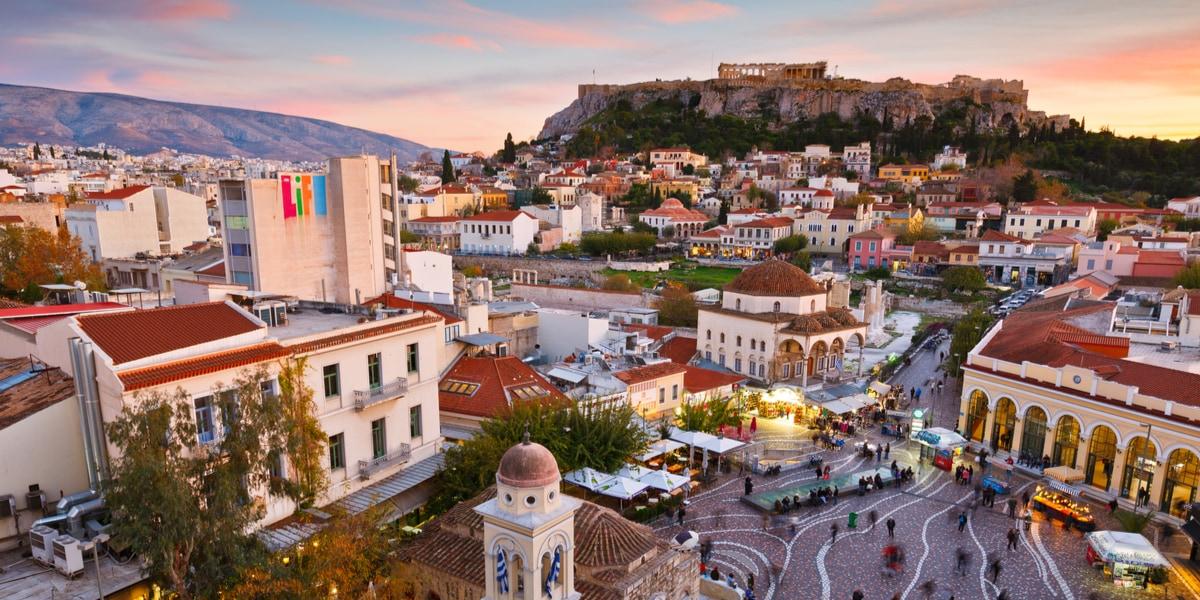
Monastiraki
Anafiotika
Street Art in Athens
The most beautiful beaches near Athens
 "/>
"/>
Acropolis
 "/>
"/>
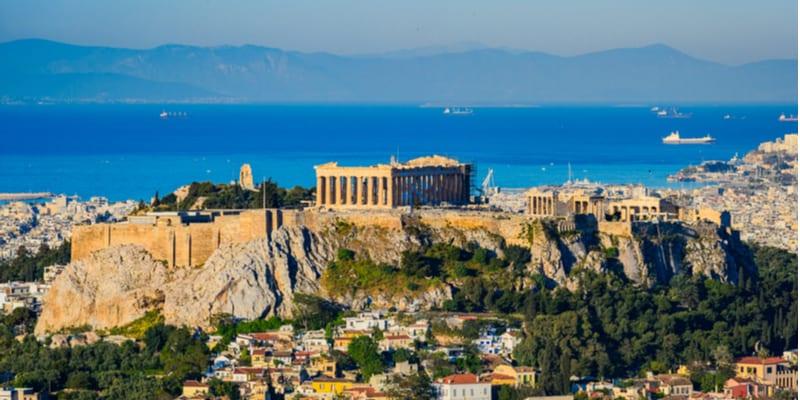
The Acropolis of Athens is the symbol of Greece and probably the most important archaeological site in the western world. Built on the sacred hill, it dominates the entire city of Athens. Almost all of the ancient monuments, which stand on the flat top of this rocky promontory overlooking the valley of Ilissos, were made of Pentelic marble and commissioned by Pericles in the 5th century BC, the Golden Age of Athens, to replace the sacred complex that had been destroyed by the Persians on the eve of the Battle of Salamis.
One enters the Acropolis through the Beulé Gate, a Roman arch added in the 3rd century AD, beyond which are the Propylaea, the ancient monumental entrance. To the south is the small temple of Athena Nike.
Dominating the Acropolis is the Parthenon, the monument that more than any other represents the splendour of ancient Greece. Completed in 438 BC, the temple remains an unsurpassed model of classical art. Its lines were ingeniously curved to correct perspective distortions: the optical illusion makes the temple appear perfectly straight and square. On the columns then one can see the remains of the frieze partly destroyed by Venetian cannons. Over the centuries, the Acropolis was actually damaged numerous times: first the Byzantines converted the temples into churches and plundered the treasures, then in 1456, when Athens was conquered by the Turks, the site became a mosque and the Erechtheion was used as a harem for the Turkish governor. The episode that most damaged the Acropolis occurred in 1687 when the siege of the Venetian army caused the Parthenon to explode, used by the Turks as a powder magazine. The sacking was completed in the 19th century by Lord Elgin, ambassador of the King of England, who brought back many marbles that are still the pride of the British Museum today. Finally, the Parthenon housed a statue of the goddess Athena to whom it was dedicated, 11 metres high and made of gold and ivory, completed in 438 BC by the Athenian sculptor Phidias. Today only its pedestal remains.
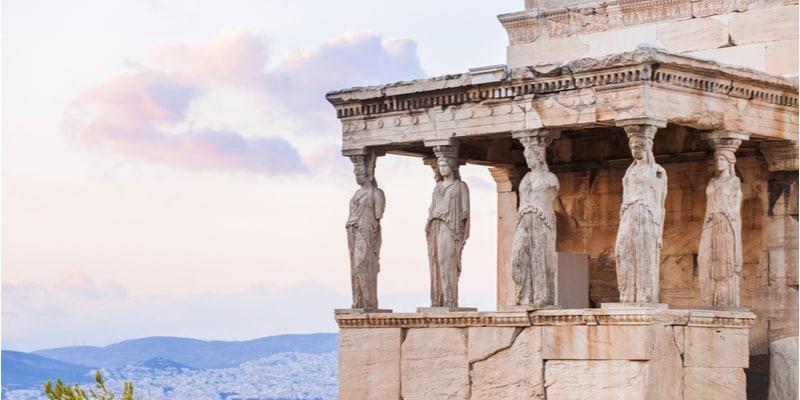
North of the Parthenon, on the other hand, is the Erechtheion with its famous Caryatids, but what you will see are plaster casts of the original statues now housed in the Acropolis Museum. Finally, at the southern base of the hill stands the Theatre of Dionysus, built in the 6th century BC to host the Great Dionysia, the festivals celebrated in honour of the god. The best time to visit the Acropolis is at sunset when red colours the sky and a gentle breeze cools the scorching summer air.
Ancient Agora
 "/>
"/>
At the foot of the Acropolis stood the agora, the beating heart of the city-state, the market square and the centre of city life. Here, archaeological excavations have unearthed buildings dating back to the 2nd century BC.
After the destruction of Athens by the Persians in 480 BC.
B.C., the city was rebuilt during the 5th and 4th centuries B.C. and it was during these years that the agora and its buildings were frequented by statesmen such as Themistocles, Pericles and Demosthenes, poets Sophocles, Euripides and Aristophanes, writers Thucydides and Herodotus and philosophers such as Socrates, Plato and Aristotle. The agora is the place where the concept of democracy developed. Here today you can visit the Tower of the Winds, built in the 1st century BC by the Syrian astronomer Andronicus.
Temple of Olympian Zeus
 "/>
"/>
The Temple of Zeus, the largest cult building in ancient Greece, is located in the heart of Athens between the Acropolis and Syntagma Square. Its construction was completed in 131 AD by Hadrian after almost 700 years of work.
Located east of the Acropolis, this imposing white marble temple dedicated to the king of Olympus impressed the Athenians with its 104 imposing Corinthian columns of which only 15 are still standing today. The columns of the Temple of Zeus, 17 metres high and each with a diameter of one metre and 70 centimetres, were arranged in two rows of twenty each on the long sides of the temple while below the pediments, on the short sides, stood three rows of eight columns each. The Temple of Olympian Zeus, originally 96 metres long and 40 metres wide, can be admired from the Acropolis and its ruins are spectacularly illuminated at night.
Syntagma Square
 "/>
"/>
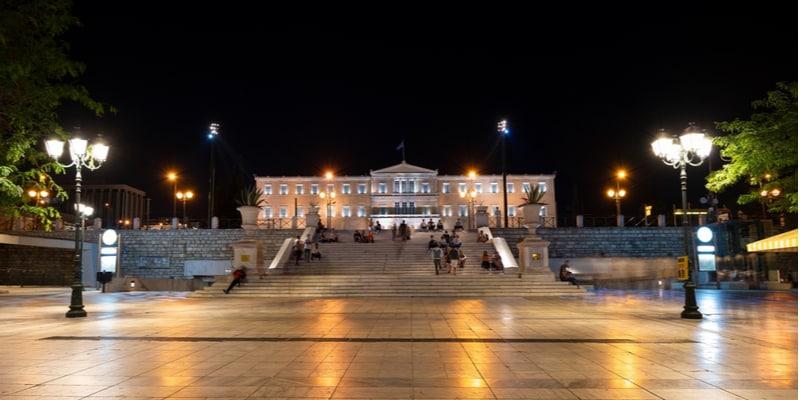
Syntagma Square or Constitution Square is the centre of modern Athens. Here in the former King's Palace is the Greek Parliament designed by Bavarian architect Von Gartner. Only the palace library is open to the public, while the Eleftherios Venizelos hall hosts exhibitions.
In the courtyard of the parliament, in front of the Tomb of the Unknown Soldier, at the stroke of every hour, you can watch the changing of the guard ceremony.
On Sunday the ceremony is even more impressive, as at 11 a.m. a platoon of guards in traditional uniform march along Leoforos Vasilissis Sofias, accompanied by the band.
(Photo: © Sriya Pixels/Shutterstock)
National Gardens
 "/>
"/>
Behind the Greek Parliament are the National Gardens where you can stroll around the pond, the zoo, the botanical museum and a playground. It is a 16-hectare green oasis stretching south towards the Panathenaic Stadium.
The gardens also contain ruins from ancient Greece, including Corinthian capitals, busts and mosaics. Designed by Amalia of Oldenburg, the queen consort of Otto, the first king of modern Greece, the National Gardens are open to the public from dawn to dusk. Don't miss, within the gardens, the ruins of the Roman baths, dating back to the 6th century and brought to light during the construction of an underground ventilation shaft.
Finally, between the National Gardens, the Parliament building and the ancient temple of Zeus, note the Zappeion, an example of late Athenian classicism and one of the most beautiful palaces in Athens. Built in the second half of the 19th century at the behest of Evangelis Zappas, a Greek who had emigrated for years to Romania where he had made his fortune, the Zappeion was intended to host the fencing championships of the 1896 Olympic Games, but today it hosts exhibitions and ceremonies.
National Archaeological Museum
 "/>
"/>
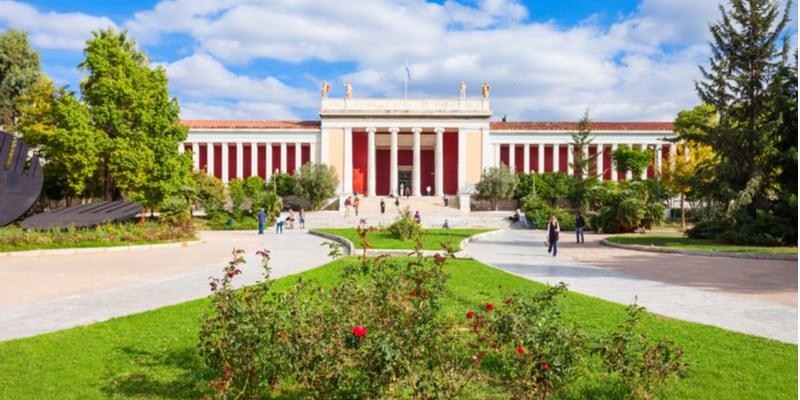
The National Archaeological Museum in Athens is one of the most prestigious museums in the world. It houses an incredible collection of Greek antiquities, including works, frescoes and artefacts spanning the entire span of ancient Greek history, from the Neolithic to the Classical Age.
The museum is housed in an imposing 19th century neoclassical building that would take days to visit in its entirety.
If you are pressed for time, look out for masterpieces such as the Head of Zeus from a statue that must have been at least 7 metres high and the golden masks, including that of Agamemnon.
Acropolis Museum
 "/>
"/>
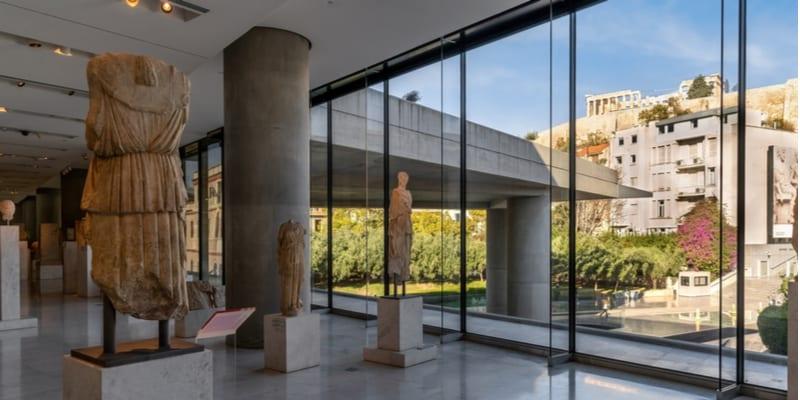
The Acropolis Museum collects all the treasures found on the Acropolis. At the entrance you will see the ruins of an ancient Athenian quarter discovered during excavations. The gallery on the first floor is dedicated to the Archaic Age, but the part not to be missed is the Parthenon Gallery where the sculptures, metopes and the 160-metre-long frieze depicting the procession of the Dionysian Feasts on the Panathenaic Way are on display.
(Photo: isidoros andronos/Shutterstock)
Benaki Museum
 "/>
"/>
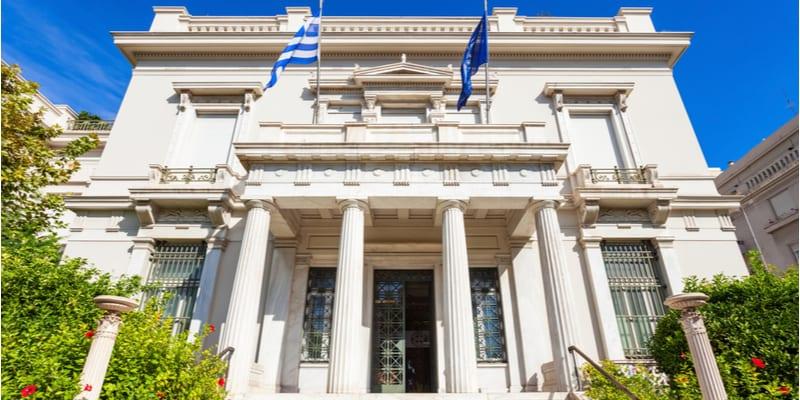
The Benaki Museum is a beautiful private museum that exhibits the collection of Antonis Benaki collected over 35 years of research between Europe and Asia. Here you can admire works of art ranging from the Bronze Age to modern times and immerse yourself in the national culture. The Benaki Museum is housed in a mansion in odos Koumpari, near Syntagma Square.
Theatre of Herod Atticus  "/>
"/>
At the foot of the Acropolis stands the Theatre of Herodes Atticus, one of the oldest theatres still in use. Built in 161 by the wealthy Greek consul Herod Atticus in memory of his wife, the Roman aristocrat Regilla, the theatre was unearthed in 1857-1858 and today hosts theatre, music and dance performances during the Athens Festival.
(Photo: © Vorobyev Viacheslav/Shutterstock)
Lycabettus Hill
 "/>
"/>
It is a rocky hill that rises from the centre of Athens and offers the best view of the city. On a clear day, you can admire the capital, the Attica basin, the surrounding mountains and the islands of Salamis and Aegina.
You can reach the top by walking along a steep path or by taking the funicular. At the top you will find the small chapel of Ágios Giórgios, a café and an elegant restaurant.
Plaka
 "/>
"/>
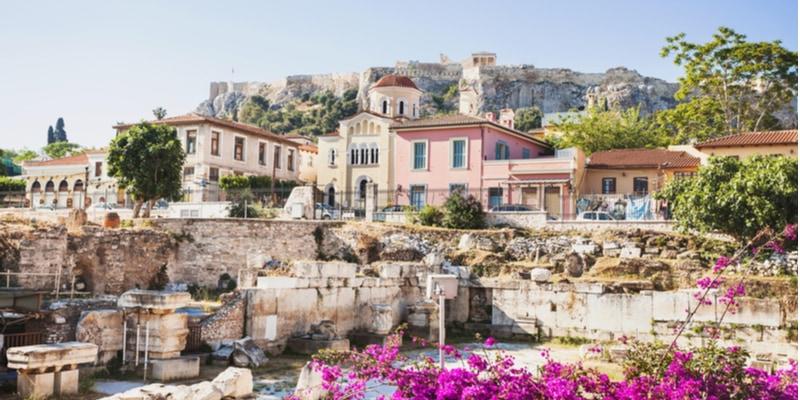
The Plaka district is Athens' most characteristic neighbourhood and is a stone's throw from the Acropolis and Syntagma Square. Here there are clubs, bars, restaurants and street food. The whole area comprising the neighbourhoods of Monastiraki, Plaka, Psirri and Gazi is actually teeming with clubs and taverns where you are spoilt for choice.
Monastiraki
 "/>
"/>
Monastiraki is another characteristic neighbourhood in central Athens, a little more decadent than Plaka but no less charming. On Sunday mornings it hosts a Flea Market with interesting antiques.
Anafiotika
 "/>
"/>
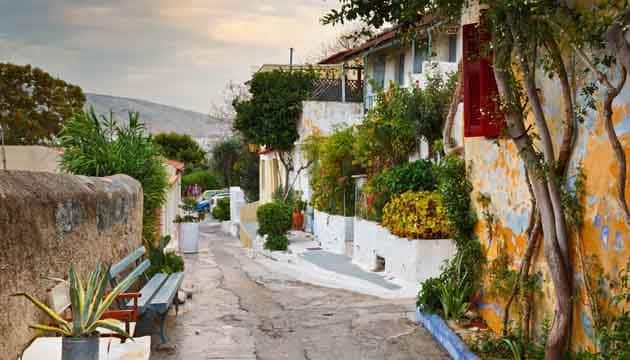
Anafiotika is a small area of Plaka that resembles an island in Greece. In fact, it was built by craftsmen from the island of Anafi who were called to work on the restoration of the Royal Palace in the 19th century. There are narrow streets, white, cubic houses and the ever-present bougainvillea colouring the walls.
Gazi
 "/>
"/>
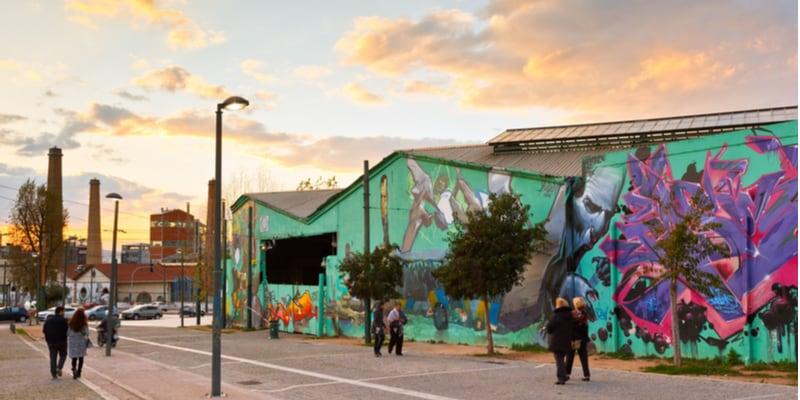
Gazi is not only one of the best neighbourhoods in which to admire street art in Athens (along with Exarchia), it is also the movida district, the one in which the number of bars exceeds the number of taverns (which are, in any case, as many as in the whole city).
Take the almost entirely pedestrianised street from Monastiraki and Gazi that runs alongside the Acropolis and the Agora. Otherwise, take the metro and get off at the Keramikos stop.
(Photo: © Milan Gonda/Shutterstock)
10 things not to do in Athens
1). Don't visit Athens in the middle of August.
2). Don't climb the Acropolis on a hot day
3). Do not touch
4). Do not do the Moutza
5). Do not eat in the metro
6). Don't think that pedestrians have priority
7). Don't rely solely on credit cards
8). Don't flush paper down the toilet
9). Don't eat only Gyors
10). Don't try to see and do everything
 "/>
"/>
The most beautiful beaches around Athens
If after visiting the city you fancy a refreshing swim, know that there are many beautiful beaches around Athens that are easily accessible. The beaches closest to the centre, such as Paleo Falirou, have well-equipped lidos that turn into nightlife centres in the evenings.
Only 11 km from the centre of Athens is Alimos beach, but it is always very crowded.
At 15 km you will find Glyfada, which is almost entirely a free beach full of trendy clubs in the surrounding area. About 20 km from Athens, on the other hand, is Vouliagmeni: a beach with a glamorous soul, more relaxing and surrounded by nature. Not far away, the beach of Varkiza impresses with its width, clear sand and crystal-clear waters. The coast of Athens ends at the spectacular Cape Sounion. On the promontory stands the temple dedicated to Poseidon, overlooking the waters of the Aegean. At its foot is a bay with turquoise waters and golden sand.
If you have more time, head to the port of Piraeus and embark on one of the many ferries or hydrofoils that connect all the archipelagos of Greece, except the Ionian and Sporades Islands. In about an hour's sail you could reach the nearby, little-known Saronic islands.
Greek Islands near Athens
Which Greek islands are easy to reach from Athens? Here is our selection
Hydra
Aegina
Spetses
Salamina
Agistri
Andros
Poros
Kythnos
Evia
 "/>
"/>
What to eat in Athens
Greece boasts a gastronomic tradition of over 4,000 years, modified over the centuries and characterised by flavours typical of the Mediterranean diet. Here is what to taste in Athens: tzatziki (yoghurt sauce with cucumber and garlic), spanokopita (filo pastry filled with spinach), tyropita (pastry filled with feta), spanakotiropites (calzone with cheese and spinach) the saganaki (fried cheese), dolmades (vine leaves stuffed with meat, risotto and vegetables), horiatiki (Greek salad with tomato, cucumber, onion, pepper, olives and feta), fasolada (bean soup tomatoes, carrots and celery), fakes (lentil soup), psarosoupa (fish soup), patsas (soup with entrails), pikilia (assortment of pickles, celery, shrimps, onions, shrimps, tomatoes cucumbers, olives and feta cheese), souvlaki (grilled skewer of meat or fish), keftedes (fried meatballs with oregano and mint), melitzanosalata (aubergine salad), fava (broad bean puree).
Among the many desserts are loukoumi (sweets made with natural flavourings) or loukoumades (pancakes soaked in honey and cinnamon). Accompany lunch or dinner with Retsina, the typical Greek white or rosé wine, and finish with a glass of ouzo (distilled from grape must and aniseed).
What to do in Athens for free
Admire the panoramic view of the city
Watch the changing of the guard at Syntagma Square
Admire ancient ruins
Visit museums
Browse art galleries
Hunt for street art
Strolling in the markets
Wandering the ancient streets
City tours
Taking a break in the green
 "/>
"/>
(Photo: EQRoy / Shutterstock)
Getting to and around Athens
Numerous direct flights connect Italy to Athens. Once in the city, you can get around easily by public transport. You can get around the centre on foot, while for the rest you can take buses and the metro, unless you prefer a comfortable taxi.
When to go to Athens
The best time to go to Athens is in spring or autumn, because in summer the heat becomes scorching and unsuitable for sightseeing.
Map and Map
Author: Francesca Ferri
Greece